On Culture Blog / Oct 27, 2026
Four Things to Know About Public Thinking Ahead of the 2026 Midterm Elections
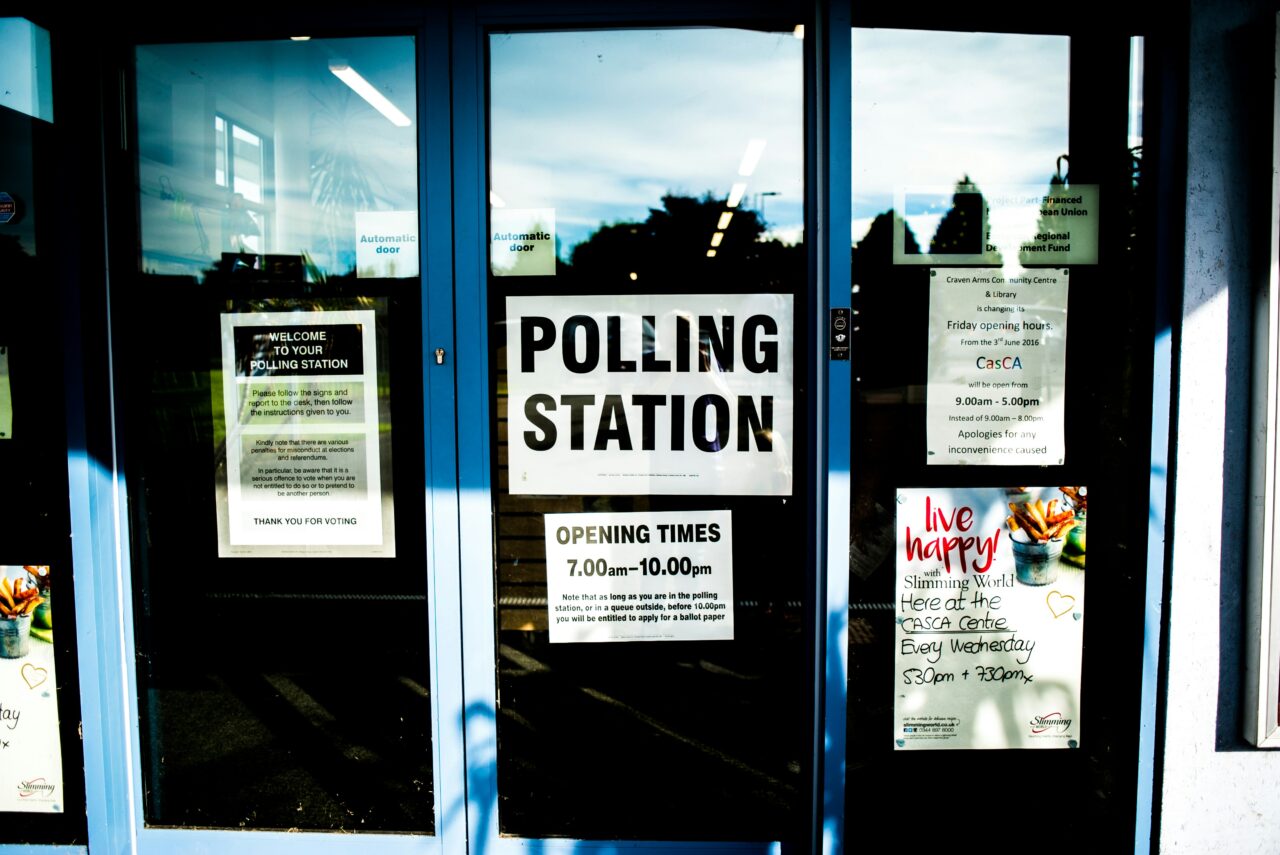
Next week, Americans across the country will head to the polls to vote in the 2026 midterm elections. How voters think about the state of the country, and their understanding of who and what is responsible for our current problems, will not only shape how they vote but will shape what’s possible in the aftermath of the election.
Polling is telling us that people are deeply dissatisfied with the status quo, that affordability will be top-of-mind at the ballot box, and that voters want change.
But what mindsets are beneath those polling numbers? What can mindsets tell us about how people are thinking about the status quo, affordability, and change?
Our research shows:
1. The anger and anti-establishment sentiments shaping this year’s election dynamics are fueled by Americans’ belief that our systems are rigged.
For the last few years, our surveys and focus groups have revealed that Americans across the political spectrum widely hold that the system is rigged to benefit a powerful few at the expense of regular people. Between two-thirds and three-quarters of Americans consistently say “yes” when asked, “Do you think the system is rigged in America?”
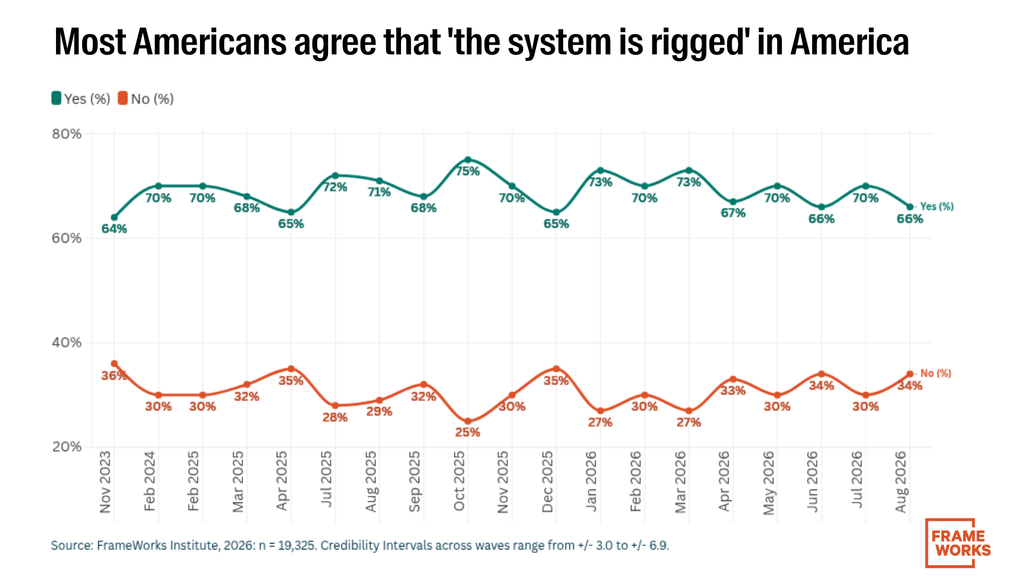
Americans’ deep dissatisfaction with our existing systems underlies anti-establishment sentiment. The system-is-rigged mindset can help us understand the anti-system attitudes that, in recent years, are driving voter choices. It’s not just that people disagree with specific policy choices or government decisions—it’s that they experience the entire system as rigged against them. We can’t ignore this experience, and it’s critical to understanding the dynamics of this year’s election and the context beyond it.
Crucially, we know that the system-is-rigged mindset can either drive productive critiques of power and calls for more just systems—or it can fuel harmful, divisive narratives. To leverage it to build demand for positive change, we must actively and intentionally engage with it.
For more on the system-is-rigged mindset and how to leverage it to build support for a more just and democratic world, see our full research report: Filling in the Blanks: Contesting What “the System is Rigged” Means.
2. Voters want fundamental changes to our political and economic systems. Simply changing leaders or applying bandaid solutions won’t satisfy them—which helps us understand why some messages are resonating and others aren’t.
Dissatisfaction with the political system is driving demand for changes to the system. Only 8% of Americans say that the system doesn’t need to be changed at all, and 60% of Americans support major changes to or complete reform of our political system:
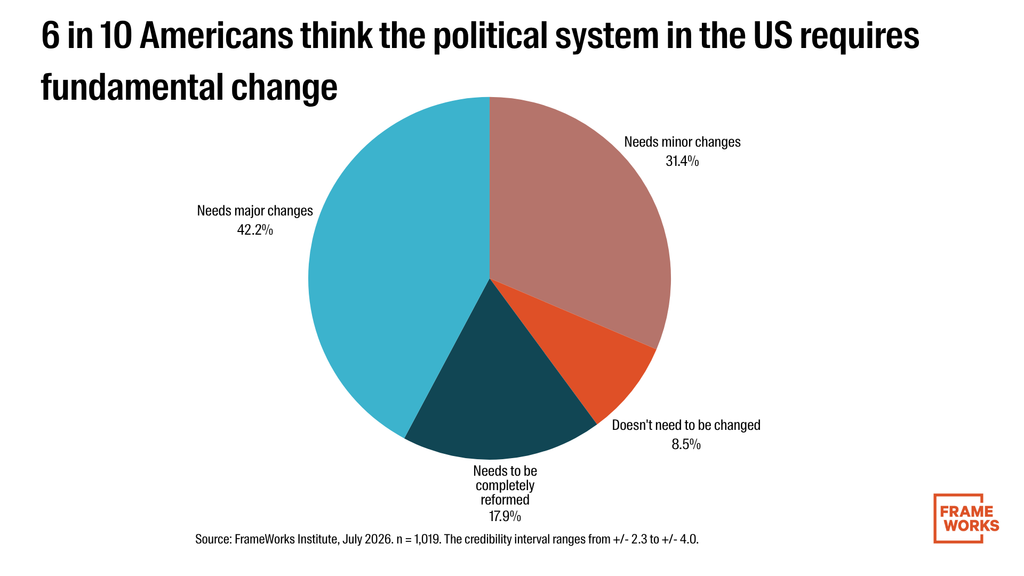
Given this, we aren’t surprised by the fact that messages speaking to problems with our systems and challenging the status quo are doing well across the country and the political spectrum.
For more on Americans’ desire for transformative change to our political system, see findings from research we conducted in summer 2025 around Tapping into Americans’ Desire for Change.
3. “Affordability” is a high priority issue for voters, but their concerns go far beyond the price of gas.
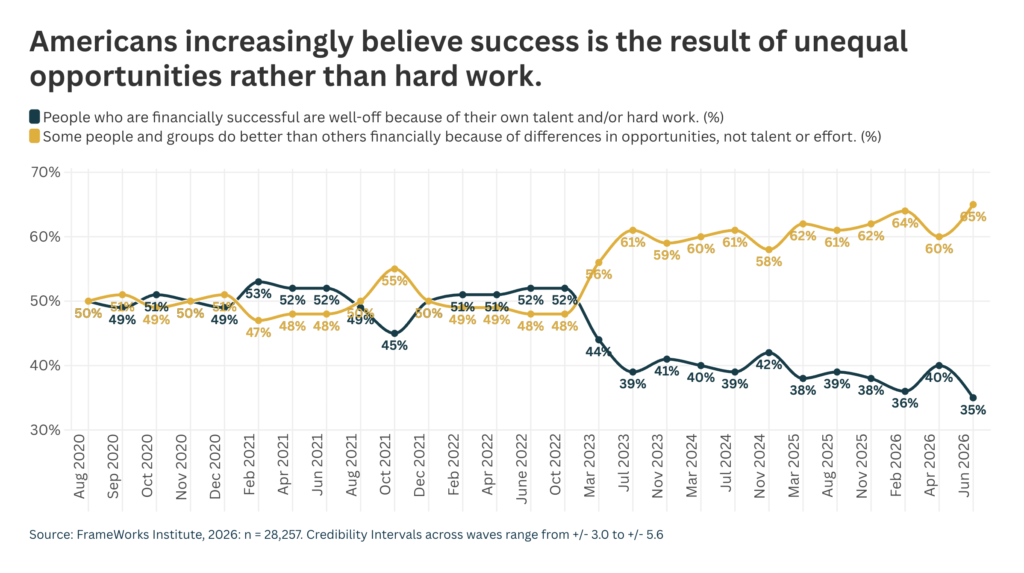
Foundational assumptions about our economic and political systems—such as the belief that hard work is key to getting ahead—are being challenged like never before.
Our focus group research consistently finds—like polling and public opinion research—that Americans are deeply frustrated with the high cost of living. People are widely experiencing the cost of living as a crisis:
“We’re meant to live. We’re not meant to work and work and work and work, and not have anything, and life not be enjoyable. You just work, and you’re still miserable in life, because you can’t afford to live…”
–Research participant in August/September 2026 focus groups, white, woman, leans Republican, age 46
“The things that you could afford back then, you can’t afford now. We’re seeing it with the food and stuff like that, but even the things we can’t see, like the chips that go into your phone and stuff. Like, things are being tariffed and taxed in a way that we’ve never seen before. So the dollar is worth less than it has ever been in the past, and inflation keeps changing the gap between poor and rich […] And then life expectancy doesn’t get too much higher, because people don’t see themselves living long lives anymore. They see themselves living in poverty and dying in poverty. No one sees a way out, because it’s almost like a mountain that you can’t even climb, you know what I mean?”
–Research participant in August/September 2026 focus groups, Black, man, Democrat, age 18
As they work harder than ever but can’t get ahead—and as they increasingly use the system-is-rigged mindset to understand the economy as being rigged against them—more Americans than ever are questioning “bootstraps” narratives about financial success:
Our research also reveals something that polling often obscures: Americans see the cost of living crisis as the result of government’s unresponsiveness to their concerns and failure to truly represent the people:
“We’re not doing real well. Prices are increasing pretty dramatically, wages are not keeping track with that, depending on where you are in the country. Housing costs are going up astronomically. And we’ve just got a Congress and an administration that just seems to say, hey, let’s do everything we can to fight and obstruct the other guy, and let’s not care about improving the lives of our constituents.”
–Research participant in August/September 2026 focus groups, white, man, Republican, age 62
People want fundamental change, not bandaid solutions. Messages that speak to the depth of people’s dissatisfaction are resonating. That includes speaking to people’s day-to-day concerns like cost of living, but messages are landing even more strongly when they show that they take seriously the fact that our economic and political systems are deeply broken for most people.
Americans want leaders who offer more than small-scale solutions to gas prices. They’re looking for an acknowledgement of the deeper systemic problems beneath these—an acknowledgement that while their own concerns and wishes are often ignored, a powerful few have too much power.
For more on the connection between the cost of living and deeper issues with our political and economic systems, see our April 2026 webinar: Connecting Democracy to Kitchen Table Issues.
4. While the public recognizes threats to elections, people usually assume that attempts to undermine elections won’t work, and have an uneven grasp of what those threats are.
In focus groups conducted in July 2026, participants expressed varying levels of concern about threats to free and fair elections. Some participants were worried that there might be genuine threats to election integrity, while others tended to dismiss these worries.
Even among those who expressed worry, participants tended to personalize the problem, seeing specific individuals in power (e.g. the President) as the source of the threat. They distinguished these individual politicians from underlying institutions, which they assumed have not fundamentally changed. This contributed to an assumption that even if certain individuals try to manipulate results, they won’t succeed and our electoral system will hold.
When different scenarios were raised (e.g., voter purging, refusal to certify election results) participants tended to evaluate these in different ways, with one notable exception: The possibility of deployment of ICE at the polls was condemned nearly universally. Participants widely understood this as voter intimidation:
Moderator: “Imagine that on election day, ICE agents or National Guard troops are stationed outside of certain polling places, in specific cities or neighborhoods. What would you think about that?”
Participant: “Voter intimidation, that is voter intimidation, they know what they’re doing, and I know somebody might say, like, well, if they’re legally here, they have nothing to worry about. Well, what if they’re trying to be legally here, and they had something to worry about? I think that’s intimidating and unfair, and the people who put them there know what they’re doing.”
–Research participant in June/July 2026 focus groups, Black, woman, Democrat, age 28
Our research shows that the following strategies can build understanding of threats to the election and galvanize resistance if necessary:
- Clarify and be explicit about the source of the threat (e.g., the federal government and its allies at the state and local levels).
- Describe the threat in broad terms—as a concerted effort involving multiple actors and levels of government.
- Talk about election interference as an attempt by those in power to take away our freedom and put us “under their thumb.”
- Use the example of resistance to ICE in Minnesota to show what it can look like to stand up and resist government overreach.
- Offer and emphasize concrete steps that people can take to resist, such as boycotting.
For more on our research into election integrity and interference, see our guide Framing Threats to Election Integrity: Findings from Focus Groups and Experimental Survey Research.
Issues: Government and Democracy
Countries: United States